.jpg)
In this OKR Podcast episode, Deidre welcomes Jaclyn Pedersen, Director of OKRs and Strategy Alignment in the Office of the CEO at GHX. Jaclyn shares how she drives cross-functional alignment around “glass ball” priorities, builds a common language for OKRs, and uses quarterly strategy execution workshops, WorkBoard scorecards, confidence flags, and Canvas retros to strengthen accountability, psychological safety, and execution discipline from director level teams all the way up to the CEO.
The Challenge
- No common language for “glass ball” priorities:
Teams could write “good” key results yet still not understand what they actually meant or how they rolled up to shared objectives, leaving L2 and L3 leaders unsure what the company was truly driving toward and hesitant to admit confusion.
- Director and manager teams operating in silos:
Director-level and manager-level leaders were deep in their own worlds with few chances to hear what other teams were thinking and driving, so cross-functional fluency was low and dependencies or conflicts between teams’ timelines surfaced late, if at all.
- Hidden misalignment on customer promises and deliverables:
Product and development were not always on the same page about what had been promised to customers (e.g., at Summit), and critical dependencies were invisible until leaders were in a room together and realized that one team did not understand what was actually included in a product.
- Weak accountability and uneven communication across levels:
Natural communication breakdowns between L2, L3, and L4 created unclear ownership of risks and shifts; leaders could elevate dependencies that then “fell through” without follow-through, while defensiveness at executive levels made it hard to create a psychologically safe space that still held people accountable for missed outcomes.
The WorkBoardAI Solution
- Always-on visibility through scorecards as the execution toolkit:
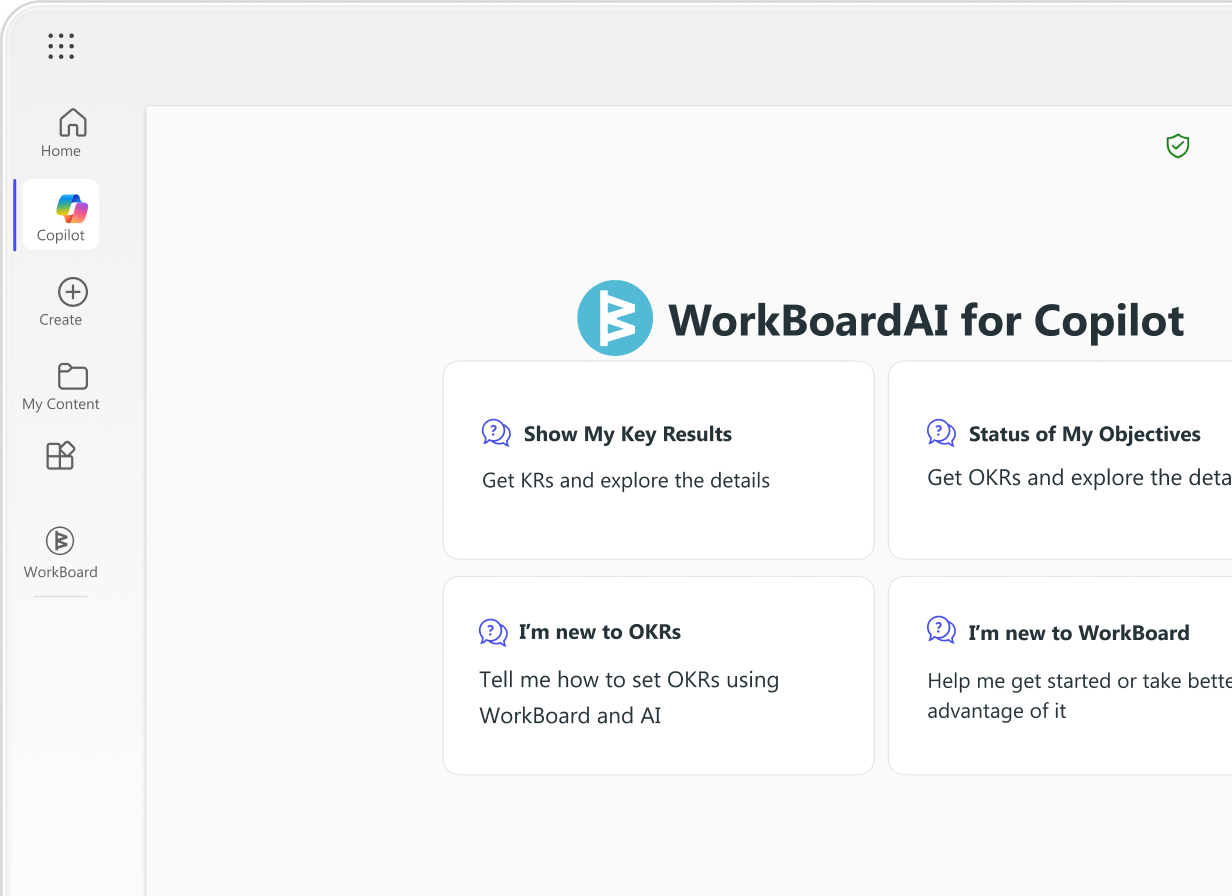
Using WorkBoard scorecards as the central way to communicate OKRs and progress gives GHX a level of visibility on KRs, dependencies, and risks “unlike we’ve ever had before,” so teams and leaders can see where they stand against commitments in one place rather than piecing it together from emails and decks.
- Confidence flags that trigger constructive executive attention:
Confidence flags in WorkBoard provide a clear, shared mechanism for signaling when a KR is at risk; instead of a “slap on the hand,” low confidence becomes an “all hands on deck” call where executives and cross-functional teams put on their “one GHX” hats to solve issues together.
- Structured retros in Canvas that turn observations into concrete shifts:
The WorkBoard Canvas retro framework helps teams distinguish between observations and shifts, pulling the thread from “what happened” to “what we’re changing next quarter,” and enables honest, transparent team retros that strengthen accountability without losing psychological safety.
- Executive-level insights and business reviews that reshape how GHX runs:
WorkBoard’s insights, business reviews, and embeddable iframes give the CEO and executives synthesized, cross-functional views they “didn’t even know were possible,” reducing time spent chasing readouts and directly influencing how GHX structures processes and reporting to align with WorkBoard’s organized, outcome-centric views.
Conclusion
By using WorkBoardAI as the backbone for OKRs, scorecards, confidence flags, and Canvas retros, GHX has moved from siloed, opaque execution to a more transparent, data-driven and cross-functional operating rhythm. Leaders now surface risks earlier, align on “glass ball” initiatives with a shared language, and turn retros into specific shifts for the next quarter, while the CEO and executive team rely on WorkBoard’s insights to understand progress and unblock strategic priorities across pods and platforms.