Article Overview
There is nothing quite like the sensation and satisfaction of being on a high performing team. I’ve had this luck and pleasure a number of times in my career, but it’s rarer than I’d like. High performing teams seem to generate their own energy and elevate everyone on the team to their full potential.
Despite achieving more, working on these teams is less taxing — the workday feels shorter and less frustrating.
So what sets high performing teams apart and why aren’t all teams so successful and fun?
High performing teams aren’t just a collection of strong individual performers, although that certainly helps. They don’t leave great performance to luck or personality, they design for success.
Here are 6 tangible and actionable attributes of high performing teams:
#1 Define goals
Defined goals and a clear plan to achieve them are essential to great performance. Abstract annual goals aren’t enough — teams need shorter-range, compelling and clear goals that unify and galvanize them on shared purpose. Sequencing these to an annual result works well, but it’s key the team wants to achieve the goals.
How OKRs strengthen this
High-performing teams operate with focus and OKRs reinforce this focus by defining:
- the outcomes that matter now
- what success looks like this quarter
- how each person contributes
Clear objectives and measurable key results concentrate energy on high-impact work and reduce the noise that slows teams down.
#2 Committed actions
Successful teams write down the committed actions each person owns on the path to goal achievement (and they waste less time determining who owns what). Members feel a sense of personal ownership and have a shared intention to accomplish the results they’ve committed to the team week over week. Making progress on actions aligned with a goal people believe in energizes people and elevates their performance, according to author and Harvard professor Teresa Amabile.
How OKRs reinforce ownership and empowerment
Every growing team requires empowerment and accountability. OKRs reinforce both by:
- assigning clear ownership for each result
- making commitments visible
- empowering people to say no to low-value work
This clarity strengthens personal agency and gives team members autonomy to drive results without confusion or rework.
#3 True transparency
Facts and status enable members of the team to work more effectively together, pivot or adjust course quickly on unforeseen events, and execute with greater efficiency and predictability. Embracing transparency is one of the most distinct features of high performing teams (and a stark contrast to the politicized and professional “ball hiders” that frequent lesser performing teams). Moreover, the activity required to achieve transparency improves the odds of goal achievement: people with written goals and actions alone have a 43% goal achievement rate while adding status reports against goals boosts the likelihood of achievement to 76%.
How OKR rituals increase transparency
High-performing organizations thrive on visible performance. OKR check-ins and retros create a cadence where teams share:
- what’s on track
- what is at risk
- what needs attention now
This prevents surprises and helps teams adapt earlier. When everyone sees the same facts, they solve the right problems faster.
#4 Unabashed accountability
The team leader and members hold themselves and each other accountable for their commitments and goal achievement week to week. When the team or a person comes up short, it’s not swept under the rug — it’s triaged and addressed quickly to get back on track to goal. There is a uniform expectation of each other, that when combined with a uniformly high level of commitment to goal, are the essence of a high performing team’s greatness.
How OKRs reduce waste and strengthen accountability
Great teams hold accountability to results, not activity. OKRs reinforce this by:
- making outcomes explicit
- identifying blockers early
- aligning effort to value
Accountability becomes easier and more natural when everyone knows what matters most and can see their contribution to the goal.
#5 Frequent feedback
Members of the team get and ask for regular feedback on their work. Learning members get positive feedback that enables them to learn and engage quickly, while expert members get constructive feedback that helps them continuously advance already-mature skills. Because team members are focused on achievement and respect each other’s commitments and efforts, feedback is easier to give and apply. For a great primer on giving feedback, check out this article by Dan Rockwell's at Leadership Freak.
How OKR retros help continuous improvement
Continuous improvement is central to every company's growth. OKR retros and regular check-ins reinforce:
- learning
- adaptation
- better ways of working
Teams that expect to learn every week give better feedback and receive it with more clarity and less defensiveness.
#6 Celebrated successes
Savor the small and the big wins as a team. Celebrate people’s individual contributions and the accomplishments of the team as a whole. In large matrixed organizations where teams coalesce and disband quickly, it takes extra effort to celebrate success but it is actually more rewarding than a cash bonus, according to McKinsey.
Why high-performing teams value wins
Building high-performing teams doesn't mean stripping away everything joyful. It is about reducing waste so teams can spend more energy on high-impact work. Celebrating wins reinforces:
- purpose
- trust
- connection
- momentum
It reminds teams why their work matters.
The systems that sustain high-performing teams
High performing teams don't become such by accident. They get consistent guidance that reinforces clarity, accountability, and continuous improvement. OKRs provide the foundation by:
- aligning goals across the organization
- connecting day-to-day actions to strategic outcomes
- enabling standardized rhythms for feedback and progress
- reducing waste by eliminating low-value work
- strengthening culture through shared purpose
OKRs create the connective tissue between strategy, execution, and team dynamics — the essential infrastructure of high-performing teams.
It's not just the business results…
People who’ve worked on high performing teams tend to remember the experience and their team mates vividly for years to come. When they describe the experience, they use words like “epic” and there is tangible pride and gratitude in their voice. That team imprint is far greater and longer lasting than its contribution to the company at which its members worked.
What are your experiences and memories from a high performing team? What made it fun and successful? What's your sense of connection to those team mates?
WorkBoardAI as the multiplier of high performing teams
High-performing teams thrive when human capability is anchored in disciplined execution. Defined goals, committed actions, transparency, accountability, frequent feedback, and shared wins shape the environment where people contribute their best. OKRs strengthen this environment, and WorkBoardAI operationalizes it so teams can sustain high performance at scale.
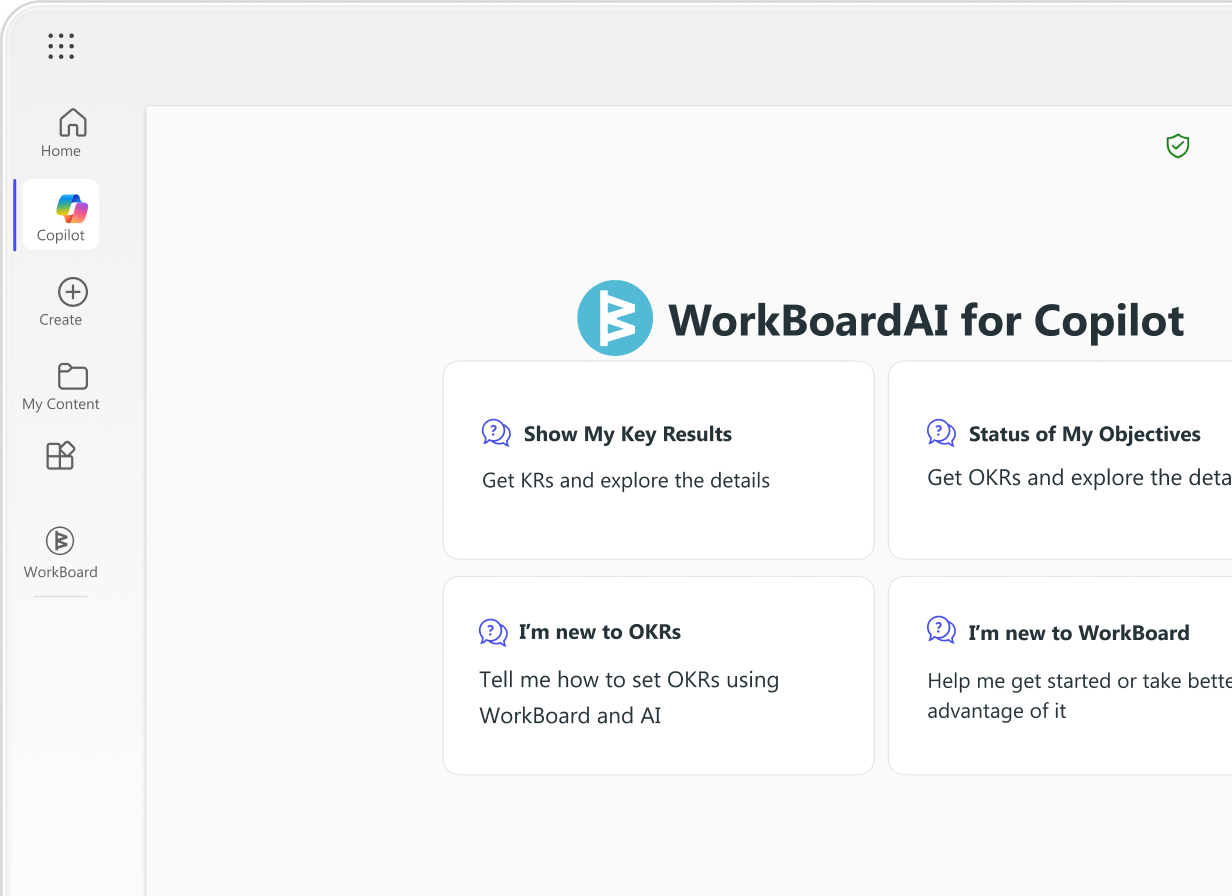
WorkBoardAI ensures everyone sees the same facts, understands the strategic context, and knows where to focus next. AI Briefs, automated Business Review insights, and dynamic scorecards help teams anticipate issues, accelerate decisions, and stay centered on the outcomes that matter. Teams accomplish more with less friction because they always know how their work drives the results the organization needs now. This alignment creates a level of performance and connection that endures, long after the quarter is over.
Learn more about WorkBoardAI.