“WorkBoard has been an essential part of putting OKRs into practice; it makes them part of the cadence of our business.”
Before WorkBoardAI
- Growth-stage execution strain:
As Workday entered its “next level of growth,” leaders recognized the company needed a more deliberate operating model to keep execution effective in a broader context (not just pockets of the org moving in parallel). - Insufficient enterprise-wide alignment at scale:
Prior to formalizing OKRs in a system, the company needed a clearer way to align priorities and “concentrate forces” on what mattered most across a large employee base (he references enabling participation across ~12,000 employees). - Team-level focus was difficult to standardize:
Greg described the need to intentionally “localize to teams versus cascade to individuals,” signaling that prior approaches made it harder to consistently orient work around teams (and “teams of teams”) as the primary execution unit. - Output/activities drift as the company grew: Greg noted that as organizations get bigger, employees can lose connection to customer outcomes and fall into an “output mindset” (more task/activity focused), reducing clarity on why work matters and weakening the customer-outcome line of sight.
Value & Results
- OKRs became operational, not theoretical:
WorkBoard made OKRs “part of the cadence of our business,” embedding them into the organization’s regular operating rhythm rather than remaining a one-time planning artifact. - Stronger alignment, accountability, and enablement:
Greg summarized the impact as “aligned, accountable and enabled,” describing improved focus on what matters most, clearer ownership of commitments, and better team operating effectiveness. - Team-centric execution at scale:
Workday kept team OKRs in WorkBoard, supporting intentional “localization” of enterprise priorities into team-owned outcomes—consistent with their “team of teams” model. - Renewed Outcome Mindset and engagement:
The combination of OKRs and platform support helped re-spark focus on outcomes over outputs, increased collaboration, and enabled visible progress/celebration (including publishing achievements and reinforcing shared wins).
Conclusion
By implementing the WorkBoardAI Strategy Execution Platform, Workday operationalized a quarterly, team-centered cadence to improve alignment and focus across the company, strengthen accountability for commitments, and enable teams to collaborate more effectively around outcomes rather than outputs. Leaders saw a renewed connection to customer outcomes and greater organizational agility in dynamic markets.
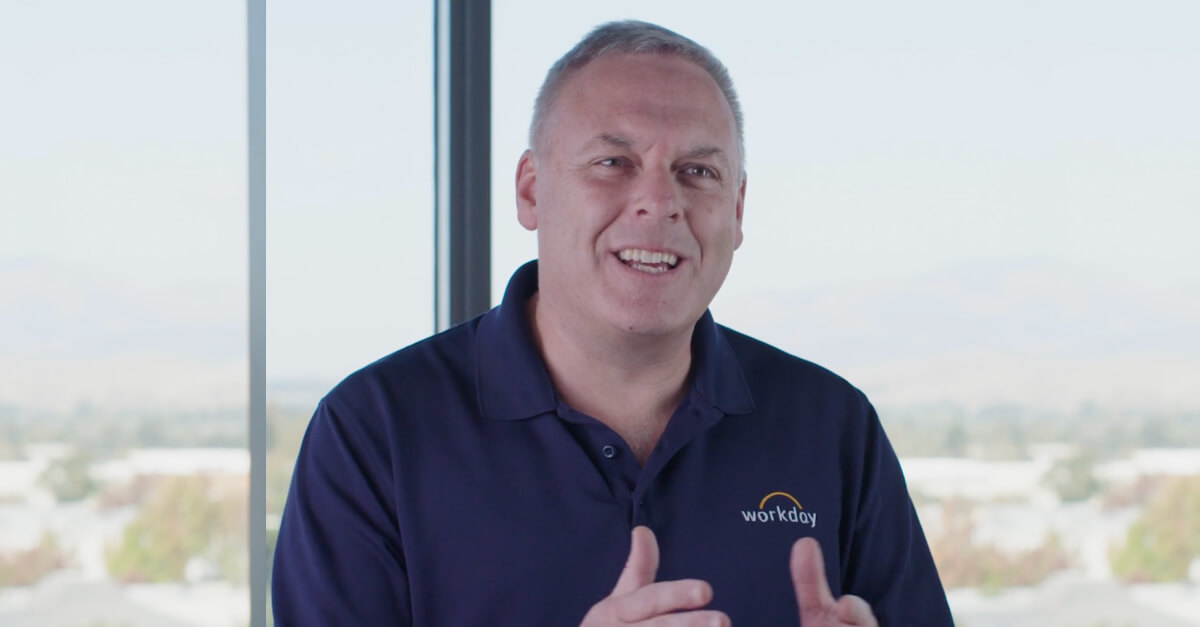
WorkBoard CEO, Deidre Paknad, sat down with Greg Pryor, SVP, People & Performance Evangelist at Workday, to explore how they’re using OKRs to accelerate growth. Greg talks about the importance of OKRs within a distibuted enterprise, how Workday harmonizes individual goals with team OKRs, and the role of managers in driving company performance.