Article Overview
If you’re not in the habit of setting and measuring goals and objectives for your team, then doing so can seem like added complexity. In fact, just the opposite is true. OKRs simplify and clarify what your team should do and provide a common definition of success.
Instead of trying to read your mind, members of your organization know what to focus on and how they’re measured; their decision quality improves and managers spend less time reacting and recovering from ill-informed choices.
The “process” of managing starts with goal setting; when goals are missing or forgotten, disproportionate time is spent on execution triage and the whole team does more work yet experiences less satisfaction.

What Is goal setting?
Goal setting is a management practice for driving clarity, coordinating effort, and accelerating performance. In an organization, goals define the outcomes teams and individuals must achieve over a specific period to move the strategy forward with speed and confidence.
The effective goal setting process is not a paperwork exercise. It is a way to align people to the outcomes that matter and ensure weekly actions add up to strategic wins. When goals are clear, measurable, and connected to company priorities, they become the golden thread that links ambition to achievement.
The goal setting theory
Decades of research reinforce a simple truth: clear and specific goals enable better performance. Edwin Locke and Gary Latham’s goal-setting theory highlights that people deliver stronger results when expectations are explicit, outcomes are measurable, and progress is visible.
For goals to drive meaningful performance, five conditions must be present:
- Clarity: Employees know the specific outcomes they are responsible for
- Challenge: Goals stretch teams without setting them up to fail
- Commitment: People understand the purpose of the goal and support achieving it
- Feedback: Teams see signals early so they can course correct
- Task Complexity: Expectations align to what is achievable in the given time
These fundamentals remain essential, but in modern organizations they are often insufficient without a system that keeps strategy connected to weekly execution.
What is a goal setting process?
A goal setting process provides a structured way to define, align, and operationalize the outcomes the organization needs now. When done well, it sharpens strategic clarity, reduces friction, and builds consistent accountability.
A strong process gives teams a clear path from strategy to execution. Goals are not created in isolation. They are aligned across levels so that weekly work contributes to the results leadership expects. This alignment reduces ambiguity and improves decision quality across the organization.
Why goal setting matters
Effective goal setting creates connection, focus, and predictable execution.
It provides strategic direction
With clear goals, people understand where to invest their time and energy. Individual responsibilities become linked to team priorities and company outcomes. This clarity closes the gap between intention and impact.
It reinforces motivation
When progress toward outcomes is visible, employees have a stronger sense of purpose. Short-term results build momentum and help teams stay engaged even as challenges arise.
It improves accountability
Defined outcomes and timelines make expectations explicit. Teams can see where execution is strong and where it needs attention. Leaders can coach on the work that truly drives results rather than on activities or assumptions.
It elevates performance
Clear goals reduce wasted effort and enable people to act on data rather than instinct. A shared set of outcomes accelerates decision-making, improves cross-functional alignment, and increases transparency.
It surfaces obstacles early
When goals and progress are visible, roadblocks become evident sooner. Teams can adapt quickly, reduce execution risk, and maintain momentum toward the desired results.
Types of goals
Organizations use several types of goals to meet different strategic and operational needs.
Process, performance, and outcome goals:
- Process goals focus on methods or actions
- Performance goals track near-term indicators that roll up to the outcome
- Outcome goals define the final result the team must achieve
Short-term and long-term goals:
- Short-term goals guide action in the next week, month, or quarter
- Long-term goals anchor the organization to values, strategy, and multi-year ambition
Individual and shared goals:
- Individual goals translate organizational priorities into meaningful personal expectations
- Shared goals build unity and help teams work with clarity across functions
Qualitative and quantitative goals:
- Qualitative goals describe directional outcomes
- Quantitative goals include metrics that make performance measurable
Goal setting frameworks
Frameworks help teams define outcomes clearly and connect them to the broader strategy.
SMART
A structure for defining goals that are specific, measurable, achievable, realistic, and timely.
OKRs
Objectives and Key Results provide a simple structure that links strategy to near-term execution. The objective states what must be achieved and the key results measure progress toward that outcome. Tasks then describe the work needed to move the key results. OKRs create a shared language of results across functions and deliver the clarity and accountability needed to execute strategy at scale.
People with goals or OKRs (Objectives and Key Results) achieve more and are more successful (a lot more successful) than peers without them, whether they’re scientists, students, or corporate execs. Organizations whose employees are actively engaged in goal achievement have 3x greater operating margins in any given year than companies with lower engagement levels.
KPIs
Key Performance Indicators measure performance over time and signal whether the organization is on track.
Backward Goal Setting
Starting with the end state and working backward enables teams to define milestones and dependencies with greater clarity.
MBO
Management by Objectives cascades leadership goals through the organization so each function understands how it contributes.
BHAG
Long-term, bold goals that orient the organization toward transformational outcomes.
4DX
Four disciplines that support execution: focus on the most important goals, act on leading indicators, maintain a visible scorecard, and foster consistent accountability.
EOS
A structured operating system for smaller organizations that emphasizes vision, people, data, process, traction, and issue resolution.
Balanced Scorecard
A lens for viewing performance through four dimensions: financial, customer, internal processes, and learning and growth.
Agile
While not a goal framework, Agile reinforces rapid learning cycles and tight connection to customer outcomes, making it a strong complement to OKRs.
Goal setting as part of strategy execution
Goal setting is only effective when it is part of a broader operating rhythm that links annual ambition to quarterly focus and weekly action. Without this connection, goals become static artifacts rather than drivers of execution.
High-performing organizations treat goal setting as a system that:
- Aligns people to the outcomes required now
- Builds accountability into weekly and monthly business rhythms
- Surfaces risks early so teams can adjust quickly
- Creates transparency so people see progress and momentum
- Ensures strategy is the golden thread through every meeting, conversation, and decision
This transition, from setting goals to enabling systematic alignment and execution, is what differentiates organizations that consistently achieve their ambitions.
Want to achieve your goals? Use these 8 tactics
Goal setting is both art and science; goal achievement results from inspiring and aligning the efforts of others and diligent management. These 8 tactics can improve how you set and how often you achieve your OKRs:
#1 Difficulty scale 8 (out of 10)
Set OKRs that require stretch and growth, but are within the realm of possibilities. Science suggests that people make less effort to achieve easy goals, which can undermine achievement. Worse, objectives that are perceived as impossible inspire even less effort and demoralize people.
#2 Inspire to aspire
Use language that inspires people to want to achieve the goals. “Triple revenues” doesn’t inspire nor speak to the heart (except for maybe the CEO and shareholders!). Use aspirational “change the world” language, the equivalent of morning coffee for your organization – energize the team and provide the jolt of progress.
#3 Less is more
More goals don’t result in more achievement. Limit the number of OKRs to concentrate action on what really matters, and you’ll achieve your goals more often. Objectives should focus efforts and enable people to optimize time and decisions.
#4 Quantify success
Define the timeline for achievement (a 6-8 week period can be most effective for dynamic organizations) and quantify what success looks like. To help your team map the “change the world” goal to their work and get the right work done, quantify several success metrics for each goal. These key results might include bug clearance rates, response or consumption targets, revenue or growth targets, quality or customer satisfaction targets.
#5 Plan to achieve the plan
The odds of goal achievement increase to 90% when the goals and OKRs are written down. Break the goals down into action and consistently hold people accountable for delivering on those actions – something half of your peers fail to do.
#6 3 second rule
Your team should be able to find the OKRs and see progress against them in 3 seconds. That’s about how long it takes to focus on the last message in their inbox – which is your goal’s competition for their time and focus.
#7 Don’t drive blind
Implement a real-time dashboard that shows your objectives, key results, actions and their status, and make it visible to yourself, your team and your upline manager. You’ll be able to triage priorities to reduce risk and improve achievement velocity. (If you’re the manager, this is essential to your job and success.)
#8 Celebrate progress
To achieve truly hard goals, science shows it’s often better to focus on how much progress has been made rather than the distance yet to go. Seeing what’s possible and what’s been achieved renews and reinvigorates teams for continuing challenge. Recognizing individual’s contribution pays off even more – 83% of employees rank recognition more valuable than compensation.
Check out the fun goals infographic below, get WorkBoard to nail the 3 second rule, and go achieve great things!
.png)
Set better goals with WorkBoardAI
What differentiates high-performing organizations is not the framework they choose, but whether goals are consistently visible, discussed, and used to guide weekly action. When people can see the outcomes that matter, understand how their work contributes, and get early feedback on progress, execution becomes faster and more predictable. Accountability shifts from after-the-fact reporting to real-time course correction.
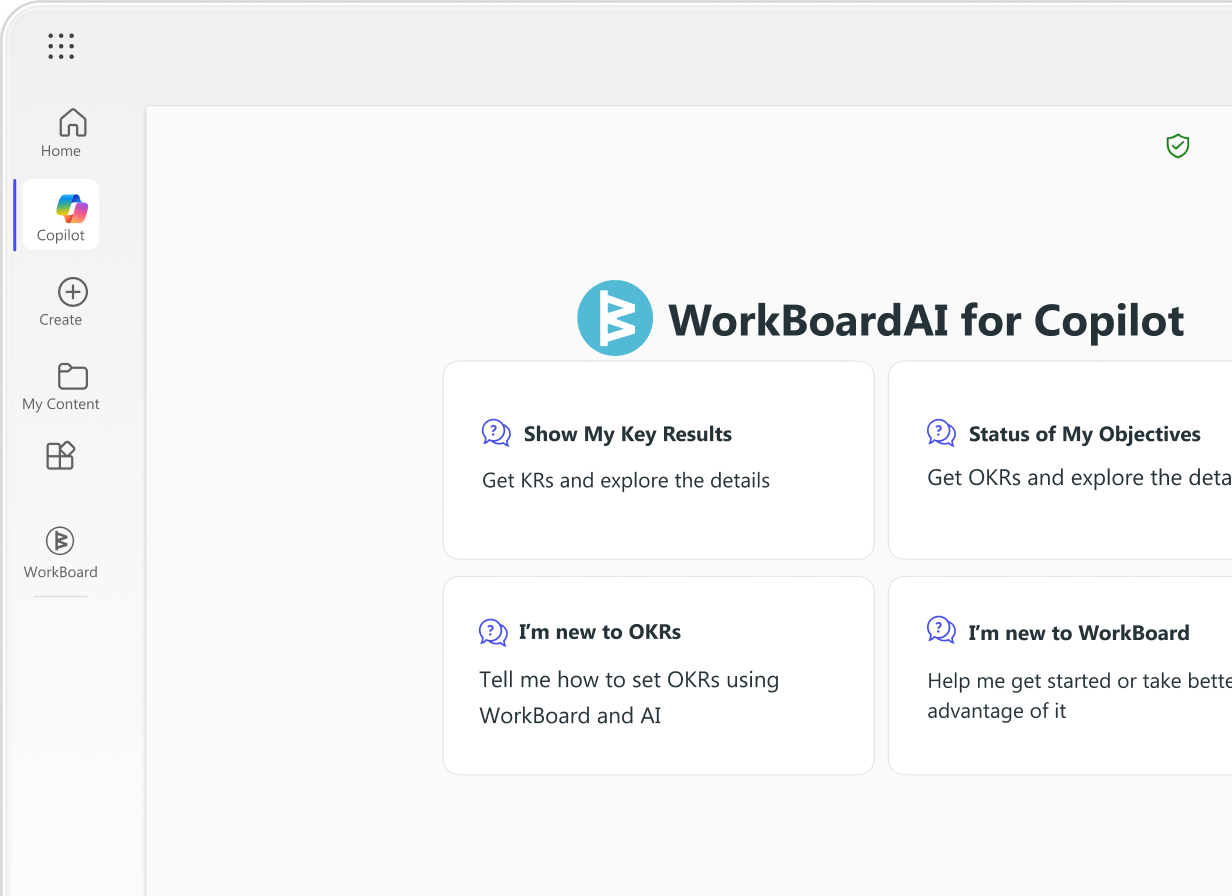
This is the role WorkBoardAI plays in strategy execution. By connecting goals, results, and actions in a shared system of record, WorkBoardAI keeps priorities present and progress explicit week over week. Leaders spend less time interpreting activity and more time coaching toward outcomes. Teams spend less time guessing what matters and more time delivering results that move the strategy forward.
Learn more about WorkBoardAI.