Article Overview
If you asked one company what their competitive advantage is over another they’d likely list out a set of features, capabilities or perhaps a unique pricing approach. And while those things may indeed provide a competitive moat for others to overcome, it’s how those features came to be that can prove equally advantageous.
In most organizations, especially large, successful ones there is a belief that dictating solutions to customers is the right approach. After all, we’re big! We’ve done well! We’ve been right before! It’s natural to believe that we’ll continue to be all of those things in the future. And, also, Steve Jobs did it.
The reality though is that so much happens from the moment a feature is dictated to the point where a customer can use it. We live in a continuous world. Amazon ships code to production every second. Technology evolves at a ridiculous pace. The barriers to entry into your marketplace get lower and lower. Consumer consumption patterns evolve with each new entry into the marketplace (see: Tinder, TikTok, Stripe, et al). The idea that we can predict what to build, how to design and implement it, what it will look like when it’s done and what our customers will do with it is heavy with assumptions and risk.
One way to mitigate the risk of prescriptive product development is with Objectives and Key Results. Instead of assigning a feature to your teams – one filled with assumptions, risks and your reputation – we assign them an OKR. The OKR provides the team with two significant changes in their goal:
- The objective tells them “why” they’re working on something and how it fits into the broader product and organizational strategy
- The key results tell them what they should look for to determine they’ve chosen the right feature and implemented it well
Here’s an example:
Objective:
Create the most intuitive online mortgage application for first-time home buyers by the end of Q2 2023
Key Results:
65% increase in first-time online applications
90% reduction in calls to customer service to complete applications by first-time buyers
The competitive advantage here is enormous and focuses entirely on reducing the risk of building something your customers don’t want. Instead of blindly working towards the highest paid person’s opinion of what customers want, teams work to better understand their customers (first-time home buyers, in this example). In doing so they understand the obstacles they’ll need to help them overcome to make them successful. It’s your customers’ success that makes you successful. It’s evident in their behavior (completion rates, complaint rates). Those behaviors are captured in your key results.
By using OKRs teams target customer success. They work in short cycles to ship ideas to market, sense how those ideas affect customer behavior and respond to what they’re learning. In most cases, they’ll make pivots along the way. Their original ideas won’t be perfect. Through continuous learning, iteration and course correction they’re able to adjust course towards a combination of code, copy, design and value proposition that best fits the desired customer behavior (aka key result). Teams that are encouraged to learn, adjust course and get to know their customers have a unique competitive advantage in their market. Setting their goals as OKRs helps them get there.
OKRs and AI agents
OKRs shift competitive advantage from prediction to learning. But learning only compounds when teams can see outcomes quickly, understand what is working, and adjust with discipline. Without that visibility, OKRs risk becoming static statements rather than a dynamic system for reducing customer risk.
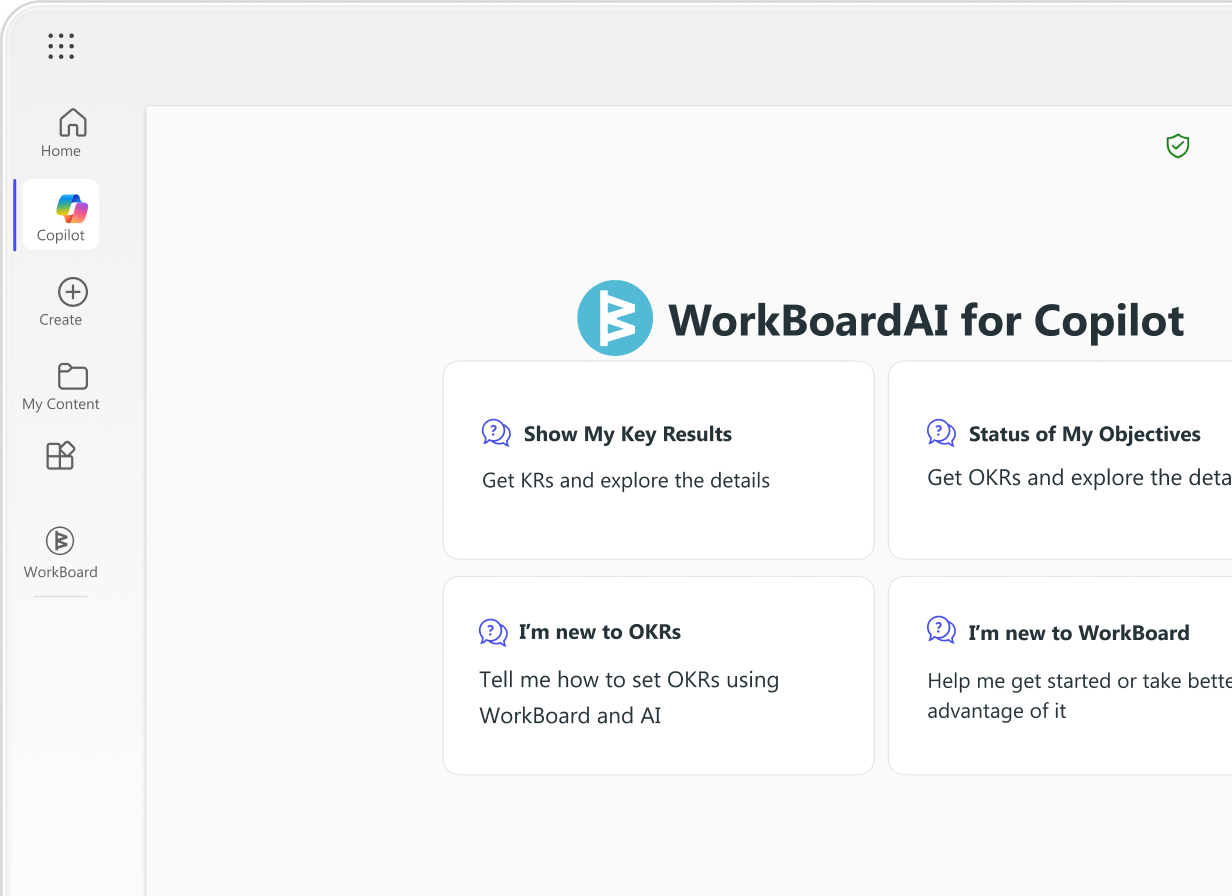
This is where WorkBoardAI strengthens product execution. By connecting objectives, key results, and real customer signals into a shared system of record, WorkBoardAI helps teams sense progress and friction earlier. AI-supported insights surface whether customer behaviors are moving in the right direction, where assumptions are breaking down, and where teams should pivot or double down. Leaders gain confidence that teams are solving the right problems, not just shipping features.
When OKRs are reinforced through continuous insight and course correction, organizations stop dictating solutions and start compounding advantage through customer success. WorkBoard helps make that learning loop reliable, repeatable, and scalable so teams can move faster with less risk and deliver what customers actually value.