Article Overview
If you're like many people, you got to mid-year review time and realized you hadn’t thought about objectives in 6 months. Not a great moment for manager or team member, but it’s a common one. Mid-year reviews are a painful reminder of how far apart work and objectives can drift and how little traditional performance management helps people perform at their best. Just 7% of employees understand their goals and what they need to do to achieve them. The disconnect creates a lot of anxiety: “How could that have happened?” “Why wasn’t I just more disciplined?” and “How will I make up the lost time?”
Then when you do look at the goals and objectives, frustration: “This has nothing to do with what our team has been focused on the last 3 months.” “Why didn’t we revise these when we changed strategy?” “How can I possibly be measured on these things when they don’t matter anymore?!” and “What’s the point of this whole process — it’s so far removed from our real work.”
That thought is quickly followed by a reminder message from HR that you still need to go through the motions. Then there is the self-realization that it’s more fulfilling to aspire to something larger and that your performance and compensation are fundamentally intertwined.
The performance process doesn’t support great performance
We live in an always-on world, but the typical approach to goals is “mostly off”. Chances are your company’s performance approach provides you little value and plays little or no role in how you manage. According to Deloitte, only 8% of companies believe their process is high value. Process and people fail when:
- Your business changes faster than your goals and objectives do.
- Operational or business goals are divorced from individual goals and you focus on the former at the expense of the latter.
- Your corporate performance system is for goal data entry — enter once, forget promptly.
- You’re not as effective as you could be centering your week and your team on goal achievement so the day to day rush overwhelms bigger intentions.
- You don’t have goals or objectives and no metrics for success exist.

Don’t leave your performance to chance (or somebody else)
Instead of setting and forgetting goals or relying on out-dated process, take control of your own career trajectory and support your team’s. Use a continuous performance process that includes setting OKRs (Objectives and Key Results) and empowering you and your team to achieve them. These five steps will help you be more successful and get more recognition:
1. Recognize the power of goals and objectives
Goals are a pre-requisite to success. A goal or OKR is how you define what you’re striving for and what success looks like. They are powerful drivers of personal growth, which accelerate success over time. Think of it this way: You and your goals must be present to win. In fact, people with goals and OKRs out-earn people without them by more than 10x over 10 years according to a Harvard study.
2. Understand the ROI of demonstrating achievement
In addition to greater focus on achievement, people with OKRs earn more because they define then demonstrate success. It’s impossible to achieve a goal you’ve forgotten and difficult to win a debate about what “success” is after the fact. Make it easy for your boss to advocate for you by providing continuous performance facts about progress on agreed-upon goals. Facts make a huge difference in employee ranking and the pay and promotion pipeline – but very few managers are really disciplined about cataloguing them for their direct reports.
3. Design OKRs into your work week
Change your process – not the company’s — to make objectives and key results a true part of your work and week. Goal-driven teams use WorkBoard to take ownership of their performance. WorkBoard supplements HR systems used to centrally manage company-wide goal setting with a “local” app to enable goal achievement. It brings business and individual OKRs together with tools to manage real-time priorities, actions and tasks on Web and mobile. Goals and work are always connected, wherever you or your team are.
4. Refresh OKRs when they’re stale
If a goal is no longer worth pursuing, change it! It’s a huge disservice to you, your team and the company to be assessed against an irrelevant goal. You can only refresh OKRs when you realize there’s a gap; they need to be integrated into your weekly work to see when execution priorities and objectives are misaligned then determine whether the goal or execution needs to change. By resetting and re-communicating objectives upline and downline when change is necessary, you get the motivational and professional benefits.
5. Measure success more frequently
There’s nothing quite like the satisfaction of achievement, so set key results and milestones in smaller increments to enjoy that satisfaction more often. If you’re a manager, driving toward goals will become habit much more quickly when they’re present in your work and you’re getting frequent satisfaction from progress. It’s just as powerful to recognize your team member’s progress and achievements every week – it’s a natural propellant. 83% of employees say recognition is more rewarding than cash!
Bringing strategic rhythm into the year end performance review
Strategic reviews and performance reviews become exponentially more valuable when:
- quarterly insights accumulate
- weekly focus is visible
- alignment is clear
- and year-end conversations connect personal contribution to organizational progress.
WorkBoardAI’s Business Review dashboards, alignment visualizations, and AI-generated briefs ensure leaders and team members have real-time clarity all year — so year-end reviews reflect the whole truth, not a retrospective reconstruction.
Performance and WorkBoardAI
Performance breaks down when goals are disconnected from how work actually happens. When objectives are set, forgotten, and later resurrected for review cycles, they create frustration instead of motivation. People want to aspire to something meaningful and be recognized for real impact, but that only works when goals stay relevant, visible, and tied to weekly execution. Continuous performance is not about more process. It’s about keeping intention, effort, and outcomes aligned as the business changes.
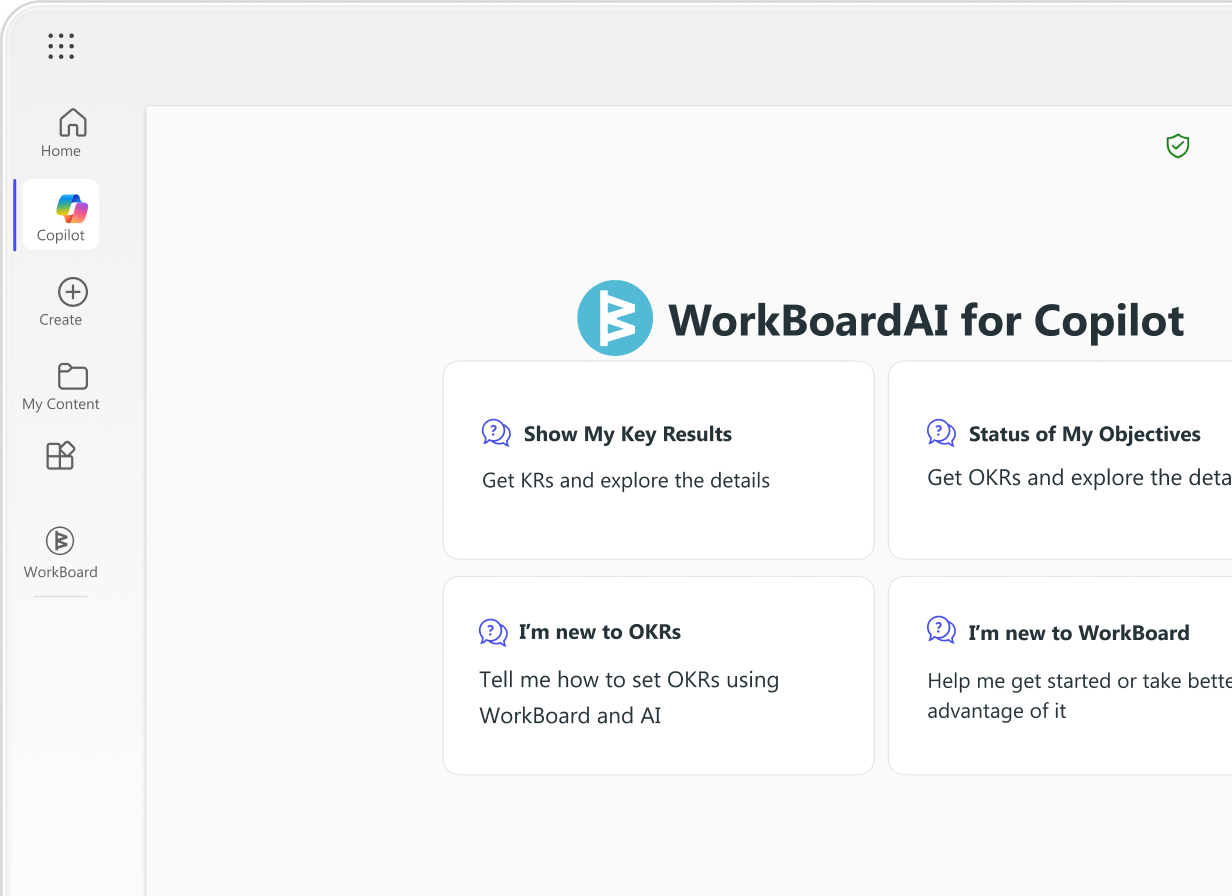
This is where WorkBoardAI and its AI agents fundamentally change the performance experience. Embedded in the operating rhythm, AI agents continuously track progress, surface misalignment, and provide real-time performance facts so goals evolve as strategy evolves. Instead of reconstructing a year from memory, leaders and employees work from shared, current truth. Performance conversations become grounded, recognition becomes timely, and reviews reflect real contribution over time. When goals, execution, and insight stay connected all year, performance stops being a formality and starts becoming a true accelerator of growth.
You don’t go to work to fail, so get serious about success.
Define goals, objectives and key results for success then bring them into focus in the work you do every week. You’ll enjoy more success, satisfaction and alignment, and you'll enjoy the year-end review moment even more.
Want more info on setting inspiring OKRs and leading your team to great achievement? Check out this video and companion infographic. Have OKRs and need help consistently aligning your work and week with goals? See WorkBoardAI in action.